Gale is a great program for any kind of literary research! I am amazed by how quickly and (mostly) accurately it processes the data. Access to seemingly endless lookup directory is one of the core features of the program, allowing to browse through millions of archived documents with as little as a single word search. Even though such process is quite similar to ”googling”, there is a some sense of exploration of the unknown that is integral to looking at original texts. Gale really gives the ability to browse through those texts to the users, which can significantly broaden their understanding of the contexts that their appear in. There is much more to understanding the meaning of writing than just analyzing the syntax!
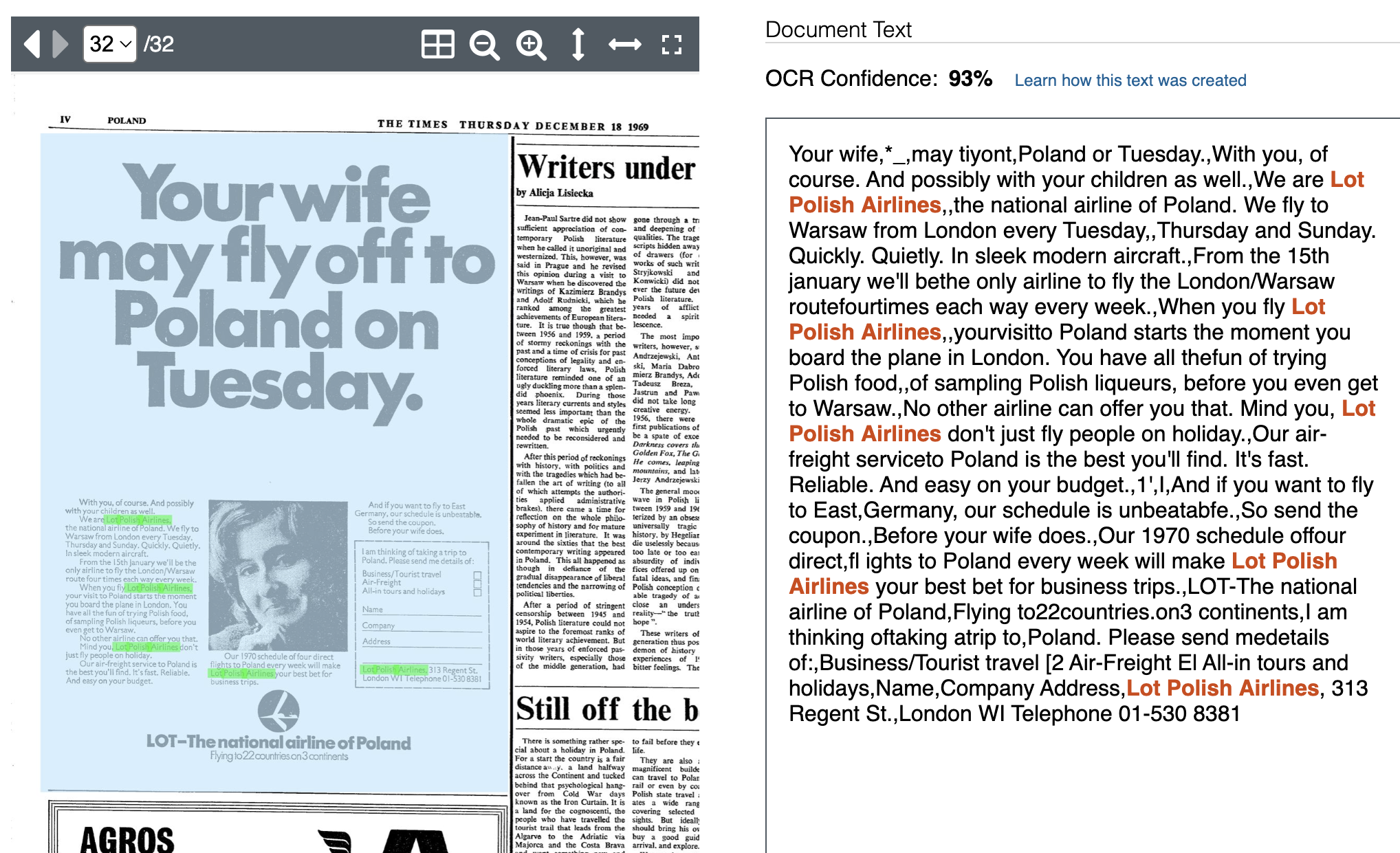
Speaking of syntax, Gale does a great job in allowing us to look into it! Thanks to its own writing-to-text analysis tool it transcribes the texts from original source into digital text format. This allows Gale to critically examine the different properties of the piece, such as the choice of words, style, or attitude. These can serve as quantitative data sources for literary research!
My favorite find on the platform is a piece of writing from a France-based Polish newspaper from the Fall of 1939 that reports on the war progress. Seeing the actual pages of the newspaper deeply changes the experience of interacting with the contents. It feels much more personal and tangible, which is exactly what one would want from digitalized media — to have it be as in-person-like as possible.